

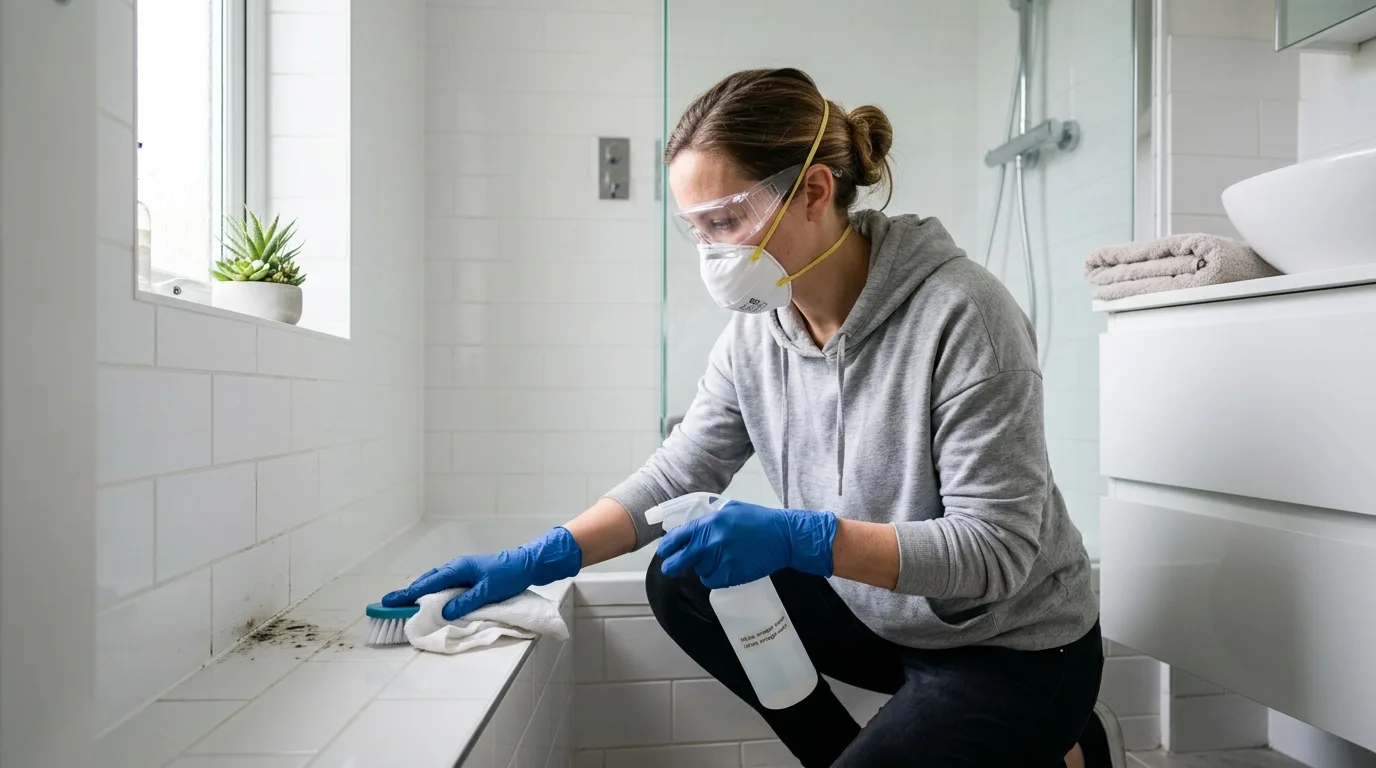
Mold shows up in El Cajon homes more often than people expect. A slow leak under a sink, a damp corner behind a dresser or a bathroom with weak ventilation can be enough. The first question most homeowners ask is simple: can I remove mold myself, or does this need a professional?
Often you can do it yourself, but not always. It depends on how much mold there is, what it is growing on, where the water came from and who lives in the house. This guide covers how to remove mold yourself safely, and the signs that you should stop and call for help.
Why take it seriously at all? Damp and mold are linked to coughing, shortness of breath, allergies, respiratory infections and worse asthma. Most spores are in the air, not just on the stain you can see. So any sign of ongoing dampness deserves attention, even if the visible spot looks small.
The Size Rule: About 10 Square Feet
The most practical guideline comes from the EPA. If the moldy area is less than about 10 square feet, roughly a patch 3 feet by 3 feet, a homeowner can usually clean it. Above that size, or where there has been a lot of water damage, the EPA points people to its remediation guidance or to an experienced professional.
Measure the area honestly. Several small spots across one wall add up. Mold on a closet wall often continues behind stored boxes. If you measure and land close to the limit, assume the real area is larger than what you can see.
Inspect before you clean
Before you start scrubbing, walk through the house and look for other signs of moisture:
- Peeling or bubbling paint that shows water is getting behind the surface.
- Wet or dark stains on drywall, ceilings or baseboards.
- Warped wood on floors, trim or cabinet bases.
- Cracks in plaster or around window frames where water can enter.
- Problem areas such as attics, crawl spaces, laundry rooms and bathrooms.
Finding one patch often leads to a second one. Knowing the full picture first tells you whether this is still a small job.
Protective Gear for DIY Mold Removal
Cleaning disturbs mold, and disturbed mold releases spores. Basic protection is not optional, even for a small area.
- Respirator: an N-95 respirator, so you are not breathing in spores while you work.
- Gloves: long gloves that reach the middle of the forearm. If you use bleach or another strong cleaner, the EPA recommends gloves of natural rubber, neoprene, nitrile, polyurethane or PVC. Do not touch mold or moldy items with bare hands.
- Goggles: the kind without ventilation holes, so spores and splashes stay out of your eyes.
- Old clothing: clothes you can wash right away or throw out after the job.
Never mix chlorine bleach with other cleaners or detergents that contain ammonia. The combination produces toxic fumes. If you are unsure what a product contains, do not combine it with anything.
Containment Basics
The goal is to keep spores from moving out of the work area and settling in other rooms. For a small DIY job this does not need to be complicated.
- Close the room off: shut doors, and cover doorways or openings with plastic sheeting if the room has no door.
- Turn off the HVAC while you work, so the system does not pull spores into the ducts.
- Ventilate to the outside: open a window, and if possible put a fan in it blowing out, not into the house.
- Bag waste on the spot: put moldy debris and used rags into heavy plastic bags in the room, seal them, then carry them out.
- Keep others away: children, pets and anyone with asthma or allergies should stay out of the area until cleanup is finished.
What You Can Clean and What Has to Go
Not every material can be saved. The difference is mostly about whether the surface is hard or porous.
Hard surfaces: usually cleanable
Tile, glass, sealed concrete, stone, metal and hard plastic do not absorb mold. Scrub them with detergent and water, rinse, and dry fully. Mold on these surfaces sits on top and comes off with effort.
Porous materials: often removed
Drywall, ceiling tiles, carpet and padding, insulation, paper and fabric are different. Mold grows into small gaps and pores in these materials, and it can be hard or impossible to remove completely. Absorbent materials such as ceiling tiles and carpet may have to be thrown away once they are moldy.
- Wallpaper and loose plaster with mold behind them are better taken off completely than cleaned on the surface.
- Moldy drywall usually needs to be cut out past the visible edge of the growth and replaced.
- Soaked carpet and padding are rarely worth saving once mold has set in.
One more rule: do not paint or caulk over moldy surfaces. Paint applied over mold tends to peel, and the growth keeps going underneath.
If the moldy area includes furniture, boxes or personal items that need to come out of the room, pack-out and contents protection services can move and clean belongings while the space is treated.
When to Stop and Call a Professional
Treating mold the wrong way can be worse than leaving it alone, because aggressive scrubbing and dry sanding spread spores through the house. Stop DIY work and get help in any of these situations.
- The area is larger than about 10 square feet, or there was heavy water damage, such as a burst pipe or a flood.
- The HVAC system may be involved. If you know or suspect that ducts or the air handler have mold, do not run the system. Running it can spread spores to every room.
- Mold is inside walls or ceilings. A musty smell with no visible source, or growth that keeps returning along a wall, often means hidden mold. Opening walls to investigate takes caution, and the mold behind them may be much larger than the stain on the surface.
- The water was contaminated. If the moisture came from sewage or other contaminated water, call a professional with experience cleaning and repairing buildings damaged by that kind of water.
- Someone in the home has health concerns. If you or a family member has asthma, allergies, a weakened immune system or other health issues, consult a health professional before starting cleanup.
- The stain does not come off, or it leaves a mark after scrubbing. That usually means the growth is in the material, not just on it.
- The mold keeps coming back after you have cleaned it more than once.
Can you remove mold in the attic yourself? Usually only a small, clearly visible spot. Attics combine insulation, which is porous, with hard-to-reach framing and poor ventilation. Larger attic growth often points to a roof leak or a venting problem, and that is past the scope of a weekend job. The same goes for how to remove black mold yourself: the color alone does not decide the method. Size, material and water source matter more.
For larger or hidden growth, see our mold remediation services in El Cajon for how professional containment and removal work.
How to Remove Mold Properly: A Short Sequence
For a small area that passes the checks above, the order matters:
- Fix or stop the water first, or the mold will return no matter how well you clean.
- Put on your gear: respirator, gloves and goggles.
- Set up containment and turn off the HVAC.
- Remove porous materials that are moldy, and bag them in the room.
- Scrub hard surfaces with detergent and water.
- Dry everything completely. The room should be dry within 24 to 48 hours.
- Clean up, wash your clothes, and check the area again over the next few weeks.
After Cleaning: Deal With the Moisture Source
Mold needs water. Spores are present almost everywhere, and they grow wherever there is moisture and something to feed on. Cleaning the visible patch without fixing the moisture only buys time.
- Find the leak: check plumbing for damaged pipes, loose fittings and faucets that are not closed fully. Look at roof flashing and around windows.
- Dry water damage fast: dry water-damaged areas and items within 24 to 48 hours to help prevent mold growth. Read why fast water extraction protects floors for more on that window.
- Control humidity: keep indoor humidity below 60 percent, ideally between 30 and 50 percent. A dehumidifier helps in rooms that stay damp. Very dry air is not good for people either, so aim for the middle of that range rather than the bottom.
- Ventilate bathrooms: run the exhaust fan during and after showers, and leave the door open when nobody is using the room.
- Watch for condensation on windows, cold walls and pipes, especially in rooms with poor airflow.
If a leak has already soaked flooring or drywall, professional water damage restoration deals with the drying before mold has time to start. The EPA's guide to mold, moisture and your home covers prevention and cleanup in more detail.
The Short Answer
Can I clean mold myself? Yes, if the area is under about 10 square feet, it sits on a surface you can clean or remove, the water was clean, nobody in the house has health concerns, and you wear proper gear. If any of those conditions fail, stop.
If you want to know who you would be calling, you can learn about our restoration team or read reviews from local homeowners. There are more guides on water, fire and mold damage in our restoration news and tips, and an overview of everything we handle on the El Cajon restoration company home page.